

Rolling Thunder Illinois Chapter 2


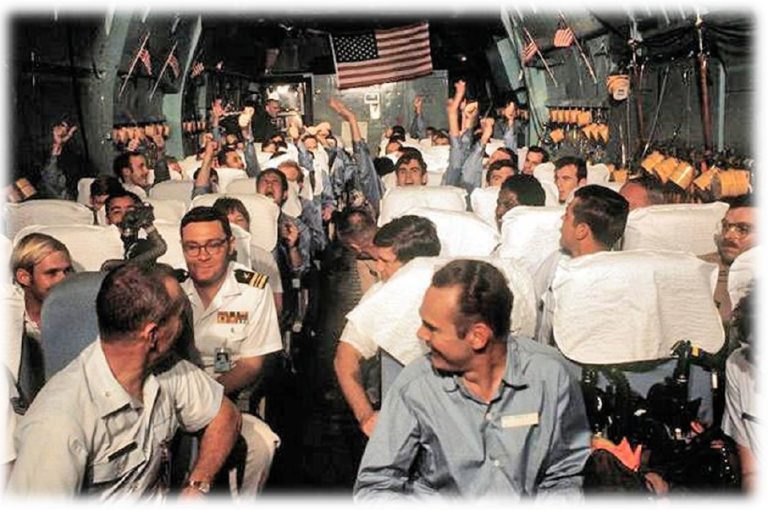
REPATRIATION OF OUR VIETNAM ERA PRISONERS OF WAR
During the Vietnam War there were many members of the United States armed forces who were held as prisoners of war (POWs) in significant numbers from 1964 to 1973. Unlike U.S. service members captured in World War II and the Korean War, who were mostly enlisted troops, the overwhelming majority of Vietnam-era POWs were officers, most of them Navy, Air Force, and Marine Corps airmen; a relatively small number of Army enlisted personnel were also captured.
Thirteen prisons and prison camps were used to house U.S. prisoners in North Vietnam, the most widely known of which was Hỏa Lò Prison (nicknamed the “Hanoi Hilton”). The treatment and ultimate fate of U.S. prisoners of war in Vietnam became a subject of widespread concern in the United States, and hundreds of thousands of Americans wore POW bracelets with the name and capture date of imprisoned U.S. service members.
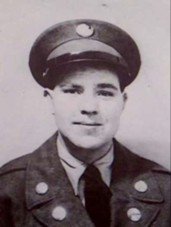
Repatriation of Cpl. Paul Eugene Hoots
Corporal Paul Eugene Hoots was born on May 8, 1925, to John Henry Hoots and Willie Eunice (Constable) Hoots of Galesburg, Illinois. Paul enlisted in the United States Army on October 12, 1948. On July 7, 1950, he was reported missing in action near Ch’anon, South Korea at the very onset of the Korean Conflict.
Hinchliff Pearson West Obituary:
https://www.h-p-w.com/obituary/CorporalPaul-Hoots
MISSING: Hoots was assigned to K Company, 3rd Battalion, 34th Infantry Regiment, 24th Infantry Division. The Defense POW/MIA Accounting Agency said he went missing after his unit engaged with the North Korean People’s Army near Ch’onan, South Korea, on July 7, 1950. He was reported missing in action the following day.
RECOVERY: Starting in December 1950, all identification efforts were moved to Kokura, Japan. Unable to associate Unknown X-16 Taejon with a Korean War loss, those remains were transferred to the National Memorial Cemetery of the Pacific, also known as the Punchbowl, in Honolulu on 8 Feb 1956.
In July 2018, the DPAA proposed a plan to disinter 652 Korean War Unknowns from the Punchbowl. On June 10, 2019, DPAA disinterred Unknown X-16 Taejon as part of Phase Two of the Korean War Disinterment Project and sent the remains to the DPAA laboratory for analysis.
To identify Unknown X-16 as Hoots,’ scientists from the DPAA lab used dental and anthropological analysis, as well as chest radiograph comparison and circumstantial evidence. Additionally, scientists from the Armed Forces Medical Examiner System used mitochondrial DNA analysis.
The Defense POW/MIA Accounting Agency announced that U.S. Army Cpl. Paul Eugene Hoots, 25, of Galesburg, Illinois, killed during the Korean War, was accounted-for Nov. 15, 2024.
Hoots’ name is recorded on the Courts of the Missing at the Punchbowl, along with the others who are still missing from the Korean War. A rosette will be placed next to his name to indicate he has been accounted for.
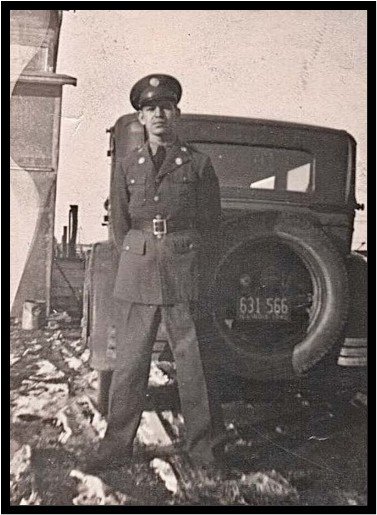
Army PFC Harry Jerele
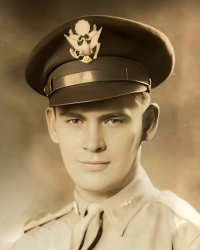
Army PFC Harry Jerele, 26, of Berkeley, IL PFC Harry Jerele served with Company B, 192nd Tank Battalion, Illinois Army National Guard, from Maywood Il., activated in November 1940. Jerele was a serving in the Philippines when Japanese forces invaded the Philippine Islands in December 1941. Intense fighting continued until the surrender of the Bataan peninsula on April 9, 1942, and of Corregidor Island on May 6, 1942.
MISSING: On 22 December 1941, the 192nd Tank Battalion became the first American tank unit to engage enemy armor in tank-to-tank combat during World War II. The unit withdrew to the Bataan Peninsula as part of the general retreat and ceased to exist on 9 April 1942 when the last surviving American and Philippine forces on the Bataan Peninsula surrendered and were taken prisoner.
PFC Jerele survived the Bataan Death March, when about 75,000 captured Filipino and American troops were forced to march 65 miles to prison camps. PFC Jerle was held at the Japanese Cabanatuan prisoner-of-war camp in the Philippines until he perished there on Dec. 28, 1942 at age 26 from pneumonia. He was buried in an unmarked grave at Cabanatuan.
RECOVERY: Following the war, those buried at the Cabanatuan cemetery were relocated to a temporary U.S. military mausoleum near Manila. In 1947, two sets of remains from Common Grave 804 were identified, but the remaining two were declared unidentifiable, including those of PFC. Jerele. The unidentified remains were buriedin Grave 804 at the Manila American Cemetery and Memorial as Unknowns.
In early 2020, the remains associated with Grave 804 were disinterred and sent to the DPAA laboratory for analysis where PFC Jerele’s remains, were identified in December 2023 using anthropological analysis, as well as circumstantial evidence.
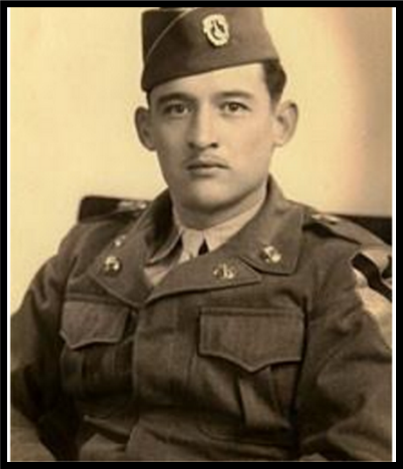
Illinois Army National Guard CPL Eriverto Ortiz
Corporal Eriverto Ortiz, 27, of Elgin, IL served with distinction as a member of Easy Company, 2nd Battalion, 27th Infantry Regiment, 25th Infantry Division. Cpl. Ortiz was born on July 29, 1923, and raised in Batesville, TX, a small farming community. His family owned the general store, and he worked there alongside his father, after school and in the summers, before joining the United States Army in May, 1948.
MISSING: On September 22, 1950, during intense fighting near the port city of Pusan, South Korea, Ortiz went missing in action. His body could not be recovered due to the fierce fighting. Tthere was never any evidence that he was a prisoner of war. In January 1956, with no further information the U.S. Army declared him nonrecoverable.
RECOVERY: In early 1951, the Army began recovering remains from the area and temporarily interred them at the United Nations Military Cemetery (UNMC) Pusan. One set of remains recovered during this period was designated Unknown X-32 Pusan, recovered in the vicinity of Kun’gong-ni, South Korea, near where Ortiz went missing. A tentative association was made between X-32 and Ortiz, but definitive proof could not be found, and X-32 was determined to be unidentifiable. The remains were sent to Hawaii where they were buried at the National Memorial Cemetery of the Pacific, known as the Punchbowl, in Honolulu. In July 2018, DPAA proposed a plan to disinter 652 Korean War Unknowns from the Punchbowl. Unknown X-32 Pusan was disinterred as part of Phase Two of the Korean War Disinterment Project and sent the remains to the DPAA laboratory for analysis.
To identify Ortiz’s remains, scientists from DPAA used dental and anthropological analysis, as well as circumstantial evidence. Additionally, scientists from the Armed Forces Medical Examiner System used mitochondrial DNA analysis and historical records to officially identify his remains on 10 August 2023.
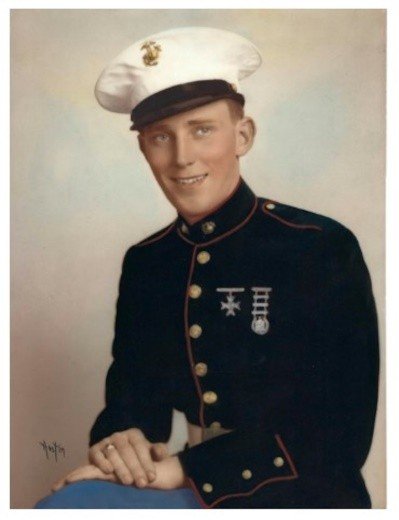
USMC SGT Robert Van Heck
MISSING: In November 1943, Van Heck was a member of Company A, 2nd Amphibious Tractor Battalion, 2nd Marine Division, Fleet Marine Force, which landed against stiff Japanese resistance on the small island of Betio in the Tarawa Atoll of the Gilbert Islands, in an attempt to secure the island. Over several days of intense fighting at Tarawa, approximately 1,000 Marines and Sailors were killed and more than 2,000 were wounded, while the Japanese forces were virtually annihilated. Van Heck died on the first day of battle, Nov. 20. A memorial marker for Van Heck was placed in Cemetery 11.
Van Heck’s name is recorded on the Courts of the Missing at the National Memorial Cemetery of the Pacific along with the others still missing from World War II. A rosette will be placed next to his name to indicate he has been accounted for.
RECOVERY: In 1946, the 604th Quartermaster Graves Registration Company centralized all of the American remains found on Tarawa at Lone Palm Cemetery for later repatriation. Almost half of the known casualties were never found. The remains that were recovered were sent to Hawaii for analysis. Those that could not be identified or associated with one of the missing were buried as Unknowns at the National Memorial Cemetery of the Pacific, also known as the Punchbowl, in Honolulu, including one set designated Tarawa Unknown X-265.
In 2017, one set of remains — labeled as Tarawa UnknownX-265 — was disinterred for analysis. Scientists were finally able to identify Van Heck’s remains through anthropological analysis and mitochondrial DNA. Van Heck was officially accounted for on April 13, 2023, and his family was briefed on his identification by the DPAA said.
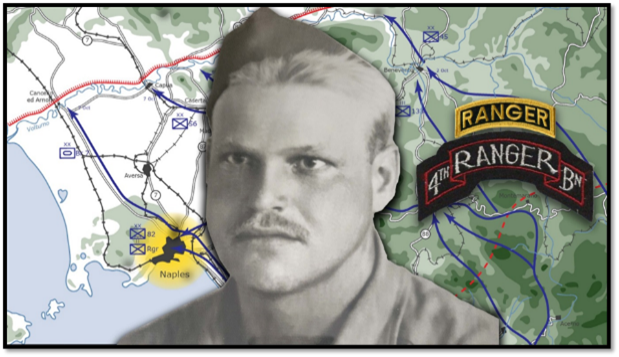
Army PFC Robert Bryant
U.S. Army PFC Robert Bryant was born on February 20th,1920 in Sedalia, Missouri and moved to Bloomington, Illinois in 1930 where he lived until he enlisted in the United States Army on December 7th, 1939 and became an Army Ranger.
MISSING: In September 1943, PFC Bryant was assigned to Company B, 4th Ranger Battalion, “Darby’s Rangers,” serving in the Mediterranean Theater in World War II.
He participated in Operation AVALANCHE, the amphibious invasion of Italy near Salerno, and engaged in fighting near the Chiunzi Pass on the Sorrento Peninsula. He was one of approximately 70 Rangers in his company who, along with the rest of the Allied invasion force, landed on the beaches close to Salerno, Italy, during Operation Avalanche.
On 23 September, 1943, PFC Bryant was reported missing in action following a four-man patrol searching for wounded Rangers west of Pietre, Italy deep in enemy territory His body was not recovered and German forces never reported him a prisoner of war. On 25 September, 1943, PFC Bryant was reported KIA. The War Department declared PFC Bryant “non-recoverable.” on July 19, 1949.
RECOVERY: In March 2022 members of the Department of Defense and the American Battle Monuments Commission (ABMC) disinterred battlefield remains and sent them to the DPAA laboratory for identification. Using anthropological and mitochondrial DNA analysis, Pfc. Robert Bryant was identified and accounted for in September 2024.
Army PVT James Loyd
U.S. Army Pvt. James C. Loyd was born on November 11, 1924, in Brilliant, Alabama. He was one of eleven children born to John Elbert and Pearlie Loyd, growing up surrounded by a bustling, hardworking family.
At the age of 18, with a sense of duty and a spirit of patriotism, James enlisted in the United States Army on May 15, 1943. He was assigned to Company “F,” 2nd Battalion, 7th Infantry Regiment, 3rd Infantry Division — a division known for its distinguished and valorous service across multiple campaigns during the war.
MISSING: In January 1944, Private Loyd was serving on the front lines in Italy as the Allies fought to advance from the Anzio beachhead towards Rome. On January 31, 1944, during a nighttime reconnaissance patrol near the village of Conca, north of Cisterna di Latina, his unit encountered heavy enemy resistance. In the chaos and darkness, Private Loyd became unaccounted for when his patrol returned to Allied lines. Despite exhaustive efforts, no further trace of him was found. He remained listed as Missing in Action (MIA) through February 1, 1945, and was officially presumed dead on April 19, 1945, under the provisions of the Missing Persons Act.
RECOVERY: In 1945, remains designated X-834 were recovered near the small hamlet of Ponte Rotto, close to where Loyd had last been seen. At the time, due to limited identification methods, the remains could not be conclusively linked to him and were buried at the Sicily-Rome American Cemetery in Nettuno, Italy.
Decades later, the Defense POW/MIA Accounting Agency (DPAA) revisited the case. Noticing the potential connection between the unidentified remains and Private Loyd, the DPAA disinterred the remains in September 2021. Using advanced dental, anthropological, and mitochondrial DNA analysis, scientists confirmed on March 14, 2024, that the remains belonged to Private James C. Loyd.
U.S. Army Corporal William M. Zoellick
MISSING:. Corporal William Martin Zoellick, missing from the Korean War, entered the U.S. Army from Des Plaines, Illinois and was a member of B Company, 1st Battalion, 9th Infantry Regiment, 2nd Infantry Division. CPL Zoellick was captured by Chinese People’s Volunteer Force (CPVF) on November 30, 1950, after his unit encountered a CPVF roadblock near Kunu-ri, North Korea. A report provided to the United Nations by the CPVF stated that CPL Zoellick died at POW Camp 5 at Ch’angsong, North Korea, on February 27, 1951. CPL Zoellick was not identified from among remains returned to U.S. custody after the war.


Army PFC John Ferguson
Private First Class Ferguson entered the U.S. Army Air Forces from Illinois and served with the 28th Material Squadron, 20th Air Base Group, stationed in the Philippines during World War II. He became a prisoner of the Japanese following the U.S. surrender in the Philippines in April of 1942. PFC Ferguson was taken to Cabanatuan Prison Camp, where he died on December 10, 1942. Camp records associated PFC Ferguson with Common Grave (CG) 917 at the camp cemetery; however, he could not be individually identified from among remains recovered from the grave after the war. In 2017, DPAA researchers requested the disinterment of four unknown remains associated with CG 917. The remains were exhumed from the Manila American Cemetery and accessioned into the DPAA laboratory. Laboratory analysis led to the identification of PFC Ferguson from among these remains.
Corporal Stanley Paul Arendt
Stanley “Sonny” Arendt, who grew up in the Palatine area, had joined the U.S. Army in 1948 at age 18, spending two years in Japan and re-enlisting to serve with his buddies in the Korean War.
CAPTURE: CPL. Arendt was a member of Company L, 3rd Battalion, 8th Cavalry Regiment, 1st Cavalry Division, which was stationed near Unsan on Nov. 1, 1950, when two Chinese divisions struck. By 0200 hours, the morning of 02 November, the Chinese had blocked the last remaining site siminsag road for a possible retreat overland. South of Unsan, the 3rd Battalion, commanded by Major Ormond, had dug in just north of the Nammyon River. By dawn, the entire regiment was completely surrounded. The 3rd Battalion was trapped by the Chinese. All day long fighter aircraft and bombers pounded the enemy positions.


U.S. Army Cpl. Chester Roper
MISSING:. U.S. Army Cpl. Chester Roper was part of a firing battery in a unit made up of African-Americans, Battery A, 503rd Field Artillery Battalion, 2nd Infantry Division In late November 1950, Roper and his unit were “overrun” by Chinese forces “deep within North Korea,” O’Brien said.
He was captured by enemy forces on Dec. 1, 1950 near Somindong, North Korea. After being held captive for weeks, Roper and others marched for five days and on Jan. 20 1951, he entered a camp near the south bank of the Yalu River near a village called Pyoktong.
1 LT James Meagher
On Feb. 8, 1944, 27-year-old warehouse manager-turned-World War II fighter pilot Jim Meagher climbed into the cockpit of his P-47 Thunderbolt and took off from an airfield in Bodney, England.
Painted on the blue nose of his plane was “Patricia Lee” — the name of the baby daughter back in Elgin, Ill., he never had seen.
But this citizen soldier never would meet his Patricia Lee. It would be 67 more years before she and the rest of his family would finally learn what happened to him that cold winter morning.


U.S. Army Cpl. Donald MacLean
MISSING:. U.S. Army Cpl. Donald MacLean was trained in light infantry, MacLean went to the Korean War as a private 1st class in Company D, 1st Battalion, 32nd Infantry Regiment, 7th Infantry Division.
During the brutal Battle of Chosin Reservoir that raged for nearly two weeks in below-zero temperatures with U.S. forces overwhelmingly outmanned and outgunned, MacLean was killed in an attack near the reservoir and reported as missing in action on 2 Dec 1950. His remains were buried on the eastern bank of the reservoir alongside other members of the “Chosin Few” killed during the bloody battle. The U.S. Army declared him “presumed dead” on Dec. 31, 1953, and promoted him posthumously to corporal.
Capt. Joseph Olbinski
Capt. Joseph Olbinski, an Army Air Force C-47 pilot with the 4th Troop Carrier Squadron, was reported MIA on 23 MAY 1944. His aircraft – what little there is left of it – was found in north Burma a few years ago. Joe’s brother Edwin, age 82, lives in Marengo, IL. He had another brother (Robert) but he died last year. Bob also was a pilot in WWII, for a B-17 rather than a C-47, but was reportedly shot down on his first mission, and spent the war in a German POW camp. Edwin was too young for service in WWII, and exempt in Korea due to his brothers’ service.


U.S. Marine Corps Sgt. George Reeser
He enlisted at a recruiting station in Chicago on 10 September 1940 and was dispatched to San Diego for his boot training. After his Sept. 10 induction, he was put on another train and arrived Sept. 14 at Camp Elliot in San Diego. He was assigned to Company A, 1st Battalion, 6th Marine Regiment, 2nd Marine Division, Fleet Marine Force, eventually achieving the rank of sergeant.
Sergeant George Reeser met his death on the island of Betio, Tarawa atoll as his battalion fought off a nighttime attack on 22 November 1943. Small groups of Japanese infiltrators found a gap in the lines between Able and Baker Companies and broke into the Marine positions, fighting with bayonets, grenades and rifle bullets. It was likely during one of these encounters that Reeser was shot in the head and killed. His body lay on the field until the following morning, until collected by a burial party and carried to a long trench grave. Reeser and 30 other Marines would lie there, undisturbed and undiscovered until early 2019.
U.S. Army Air Corps Sgt. Francis Wiemerslage
In March 1945, Wiemerslage was assigned to the 549th Bombardment Squadron, 385th Bombardment Group, 8th Air Force, serving in Germany. He was the ball turret gunner on a B-17G Flying Fortress bomber during a bombing mission over Dresden, on March 2. Enemy fighters attacked the bomber between Berlin and Leipzig, and the plane was shot down. Two of the nine crew members survived the incident, while the rest, including Wiemerslage, were killed. Seven men were reportedly recovered from the wreckage and buried near Züllsdorf. After the war ended, there was no evidence of Wiemerslage being a prisoner of war or having survived, so a Finding of Death was issued a year after the crash


U.S. Marine Corps TSgt. Harry “Bud” Carlsen
He enlisted in the Marine Reserves in December of 1941. He rose to the rank of Technical Sergeant and served as the Quartermaster Maintenance Chief for Company A of the 2nd Marine Divisions’ 2nd Amphibious Tractor Battalion. In November of 1943, he was among the first troops to assault the heavily fortified enemy defenses of Betio Island Red Beach One, Tarawa Atoll, Gilbert Islands as part of an advance team whose mission was to establish a headquarters for tractor battalion operations.
Bud was one of 550 Marines killed in the battle whose remains were not identified or recovered. Dog tags were removed, gravesites obliterated, and records lost. TSgt Carlsen was buried on Betio, but he could not be identified among remains disinterred from the island following the war.
U.S. Navy Fire Control Mate 3d Class Adolph Loebach
Adolph Loebach was born on August 24, 1919 in LaSalle to Henry and Veronica (Gorski) Loebach. He had graduated from St. Mary Parochial School and later attended LaSalle-Peru High School. Prior to enlisting in the Navy in 1939, he was employed at National Sheet Metal in Peru.
On Dec. 7, 1941, Adolph Loebach was assigned to the battleship USS Oklahoma, which was moored at Ford Island, Pearl Harbor, when the ship was attacked by Japanese aircraft. The USS Oklahoma sustained multiple torpedo hits, which caused it to quickly capsize. The attack on the ship resulted in the deaths of 429 crewmen, including Loebach.


U.S. Navy Fireman First Class George Price
Fireman First Class George F. Price was serving aboard the ship when it was attacked and capsized in Pearl Harbor. For his service Price was awarded the Purple Heart Medal, Combat Action Ribbon and Navy Good Conduct Metal.
On Dec. 7, 1941, Price was assigned to the battleship USS Oklahoma, which was moored at Ford Island, Pearl Harbor, when the ship was attacked by Japanese aircraft. The USS Oklahoma sustained multiple torpedo hits, which caused it to capsize almost immediately. The attack on the ship resulted in the deaths of 429 crewmen, including Price.
U.S. Army Cpl. John G. Krebs
Cpl. John G. Krebs was a member of Company L, 3rd Battalion, 21st Infantry Regiment, 24th Infantry Division, Task Force Smith, engaged in combat operations against the North Korean People’s Army south of Chonui, South Korea, when he was declared missing in action.
Krebs was 19 when he and his twin brother, George, were fighting in the Korean War in Chochiwon, South Korea, on July 11, 1950. Both were members of Company L, 3rd Battalion, 21st Infantry Regiment, 24th Infantry Division. At 0816, 11 July the task force opened fire on a column of thirty-three North Korean tanks supported by a massive number of infantry. Due to a lack of modern anti-tank weapons the task force was able to knock out only four tanks.

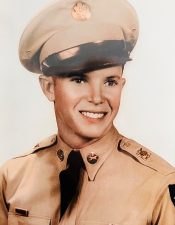
U.S. Army Sergeant Richard E. Crotty
MISSING: In late 1950, Crotty was a member of Easy Company, 2nd Battalion, 9th Infantry Regiment, 2nd Infantry Division. On 1 September 1950, Crotty’s was reported missing in action after his unit was engaged by the Korean People’s Army near Yongsan, South Korea. There is no indication his remains were recovered after the battle, and he was never recorded as a prisoner of war. The Army issued a presumptive finding of death on Dec. 31, 1953, and his remains were determined to be nonrecoverable in January 1956.
RECOVERY: In April 2017, Crotty’s next of kin contacted the Army and requested the disinterment of X-1667 Tanggok as a potential association with Crotty. The remains were disinterred on Sept. 8, 2018, and transferred to the DPAA Laboratory at Joint Base Pearl Harbor-Hickam, Hawaii for analysis. To identify Crotty’s remains, scientists from DPAA used dental, anthropological, and isotope analysis.
U.S. Army Air Forces 1LT Edward McGuire
MISSING: First Lt. Edward T. McGuire died Aug. 1, 1943 at 22years old when his B-24 Liberator bomber went down near Ploiesti, Romania, during Operation Tidal Wave in World War II. His death was presumed when he did not make it back to the Allied base following the operation.
Operation Tidal Wave was a flyover mission which sought to use U.S. and British bombers, including the one piloted by McGuire, to take out German oil refineries in Romania. His was one of 177 planes that took part in
Operation Tidal Wave to bomb the oil refineries in Romania that fueled Germany’s war machine. While McGuire was able to save his crew, his B-24 Liberator was shot down by anti-aircraft fire before he could bail out. McGuire’s plane was among the 51 that failed to return. The Allied casualties from the battle stand at 310 airmen killed, 108 captured, and 78 interned in Turkey. 1LT McGuire was buried as an unknown in Belgium for 80 years.
McGuire, born April 11, 1921, was posthumously awarded the Distinguished Flying Cross and the Purple Heart.
RECOVERY: Following the war, the American Graves Registration Command (AGRC), the organization that searches for and recovers fallen American personnel, disinterred all American military from the Bolovani Cemetery in Romania for identification. The AGRC was unable to identify more than 80 unknowns from Bolovani Cemetery, and those personnel were permanently interred at Ardennes American Cemetery and Henri-Chapelle American Cemetery, both in Belgium. In 2017, DPAA began exhuming unknowns believed to be associated with unaccounted-for airmen from Operation TIDAL WAVE losses. These unknowns were sent to the DPAA Laboratory at Joint Base Pearl Harbor-Hickam, Hawaii, for examination and identification. On June 30, 2023, the Defense POW/MIA Accounting Agency (DPAA) announced that U.S. Army Air Forces 1st Lt. Edward T. McGuire, killed during World War II, was finally accounted for June 30, 2023.
U.S. Army Cpl. Richard Seloover
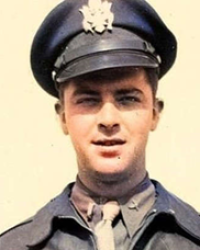
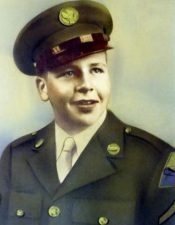
MISSING: In September 1950, Seloover of Whiteside, Ill., was a member of Heavy Mortar Company, 9th Infantry Regiment, 2nd Infantry Division. He went missing in action along the Naktong River in the vicinity of Yongsan, South Korea, on Sept. 6, 1950 during one of the heaviest battles of that war. Because of intense fighting, his body could not be recovered at that time.
The exact circumstances of his death were unknown, and the U.S. Army issued a presumptive finding of death on Dec. 31, 1953. On Dec. 29, 1950, Unknown Remains X-348 was recovered from an isolated grave near the village of Bon-Po, roughly 5 miles from where Seloover was reported lost. The remains could not be identified at the time and were buried as an unknown in the National Memorial Cemetery of the Pacific in Honolulu.
RECOVERY: In June 2021, DPAA personnel disinterred Unknown X-348 and sent the remains to the DPAA laboratory for analysis. Scientists from DPAA used dental and anthropological analysis, as well as chest radiograph and other circumstantial evidence. Additionally, scientists from the Armed Forces Medical Examiner System used mitochondrial DNA (mtDNA) analysis.
PFC Seloover’s name is recorded on the Courts of the Missing at the Punchbowl, along with the others who are still missing from the Korean War. A rosette will be placed next to his name to indicate he has been accounted for. Seloover will be buried in Rock Falls, Ill., on 4 June 2024.
2LT Robert Porter
MISSING: On February 24, 1944, he was the navigator aboard a B-24J Liberator (serial number 42-100312) which took off from its airbase in England, for a bombing mission against enemy targets near Gotha, Germany.
During the mission, his aircraft sustained damage from an enemy fighter attack and exploded in mid-air near Bad Salzungen, Germany. Two crew members survived the attack, but the rest, including 2LT Porter, were lost in the explosion. Post-war search efforts to find his remains were unsuccessful.
RECOVERY: In March 1952, the American Graves Registration Command (AGRC) took custody of commingled unidentified remains from Bad Salzungen Cemetery. Among them were remains belonging to several crewmembers from a bomber crash between Bad Salzungen and Leimbach-Kaiseroda. However, there was not enough evidence to warrant an individual or group identification, and they were ultimately interred in the Ardennes American Cemetery. In June 2021 these remains were disinterred and transferred to a DPAA Laboratory for further study. The laboratory analysis and the totality of the circumstantial evidence available established one set of these remains as those of 2LT Porter.
Second Lieutenant Porter is memorialized on the Tablets of the Missing at the Henri-Chapelle American Cemetery in Hombourg, Belgium. A rosette will be placed next to his name to indicate he has been accounted for.
Illinois Army National Guard, Private First Class Harry Jerele